
Blog post #2: Evaluating misinformation education tools
One of my biggest realizations in this class so far is that I encounter misinformation on social media every day, and most of the time I just scroll right by it. It is really interesting to learn more about how the presentation of content can affect how someone interprets it, both positively and negatively. I work in content creation, so it is really helpful to see the negative side of this use, since there is a way I could do it positively. I know it is right in front of me, but seeing a video feel completely real and the caption give it a whole new meaning is really crazy. I see this used in seemingly harmless ways every day, but seeing it used to spread misinformation and cause harm makes you think twice about the technique, even for things I wouldn’t think were significant.
Looking at the RumorGuard tool was cool. I liked how it broke down the reasons something is labeled as misinformation. I specifically looked at the “Old video circulates in wake of Indonesia earthquake.” post, in which footage from a 2024 earthquake in Taiwan was used to make it appear to be the aftermath of an earthquake in Indonesia that occurred in August 2026. I chose this post because it connected to the point that the video itself can be real, but the caption is misleading. I also saw posts about this disaster circulating on social media, so I wondered if I’d seen something similar. There wasn’t a need to use AI or any editing to create misinformation, just the use of false context. I think this example is important to look at, given how much attention is on spotting AI-generated media, which we did in a previous module in this course, but using media to manipulate the meaning of something can come from so many other things besides the actual video. Things like the caption, the order in which clips are put, the music used, etc. I really like that RumorGuard takes one example and teaches someone how to apply the same strategies used on one piece of misinformation and apply it to all, and that it promotes having news literacy by developing a “healthy skepticism,” which I honestly think is a helpful tool in daily life outside of analyzing media. The only downside I see to RumorGuard is that it still requires an extra conscious step to investigate the post you are seeing. Most people, myself included, want to just mindlessly scroll, but being an active, attentive scroller is something we all need to work on.
Then, the way Bad News approached the issue was completely different. You had to become the one who spreads misinformation and see how different approaches and posts affected the account’s credibility and engagement. There was research done that noted that the idea behind the Bad News site was to create a form of psychological inoculation, which is that when you expose someone to weakened examples of misinformation techniques, it makes them more skeptical and resistant to actual posts they encounter later that use those techniques.
One of the first choices I had to make was whether I should create a fake account or impersonate someone important.
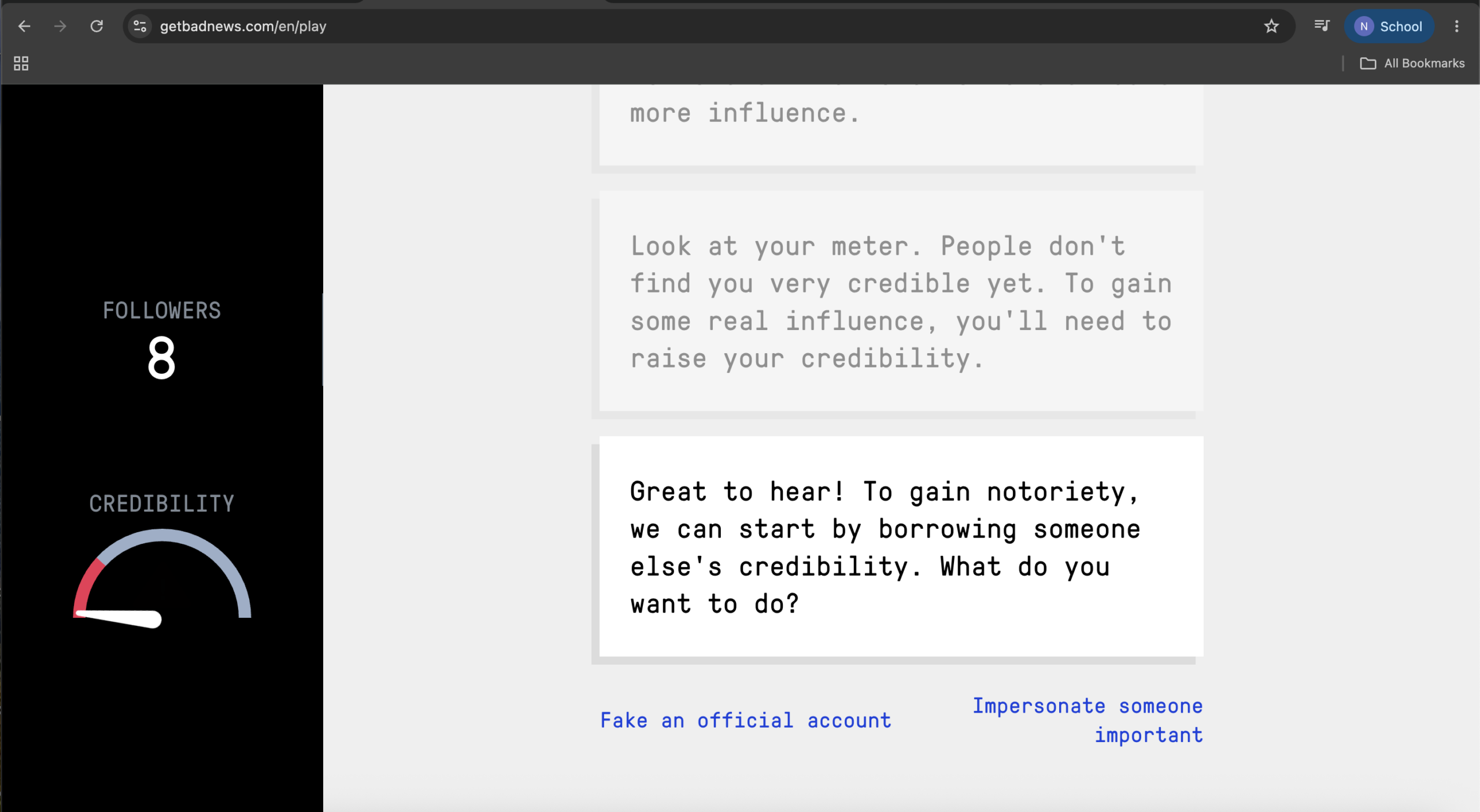
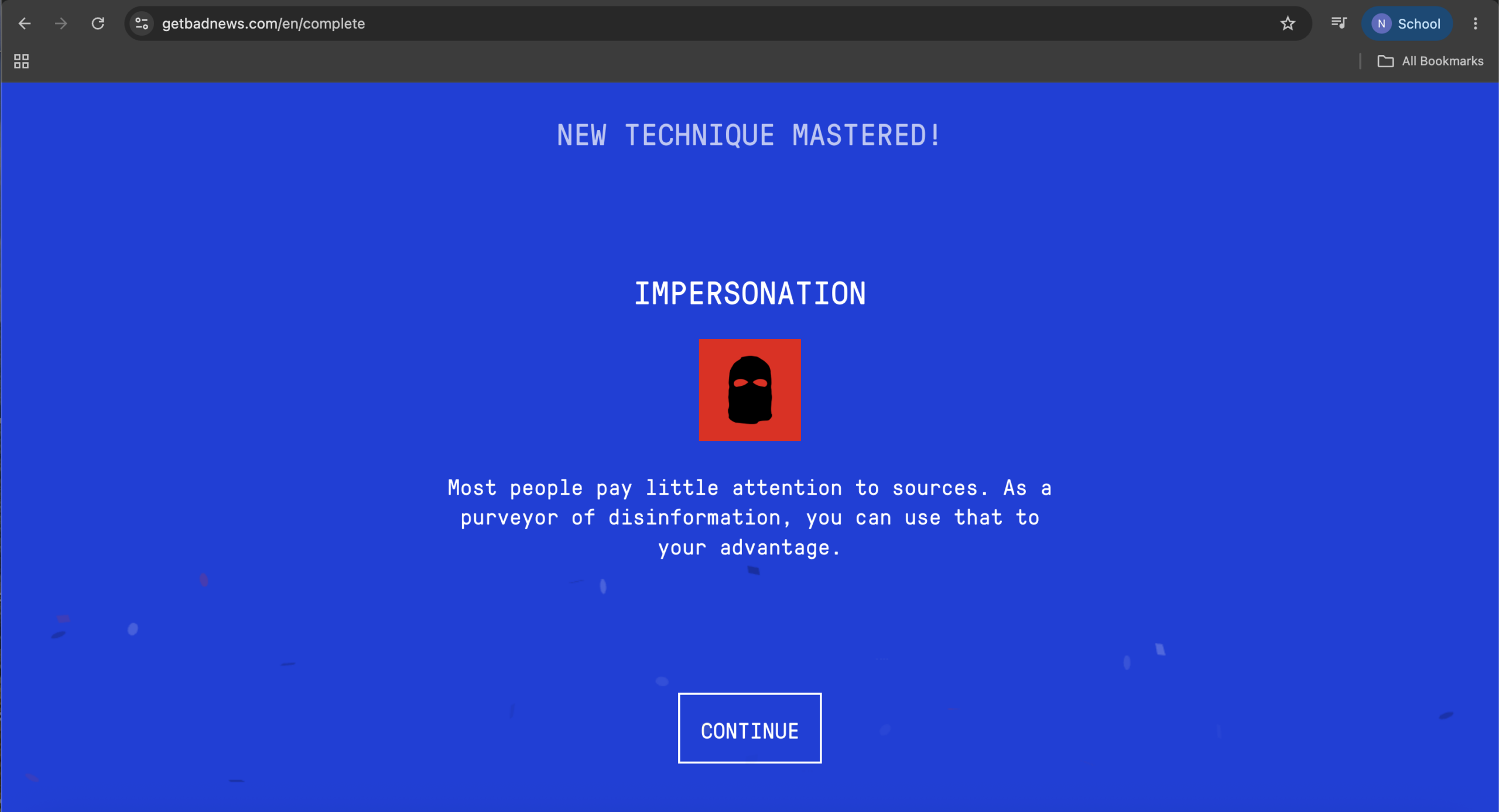
That section pointed out an interesting aspect of misinformation: people don’t really pay that close attention to sources. So that is something people who spread misinformation often exploit.
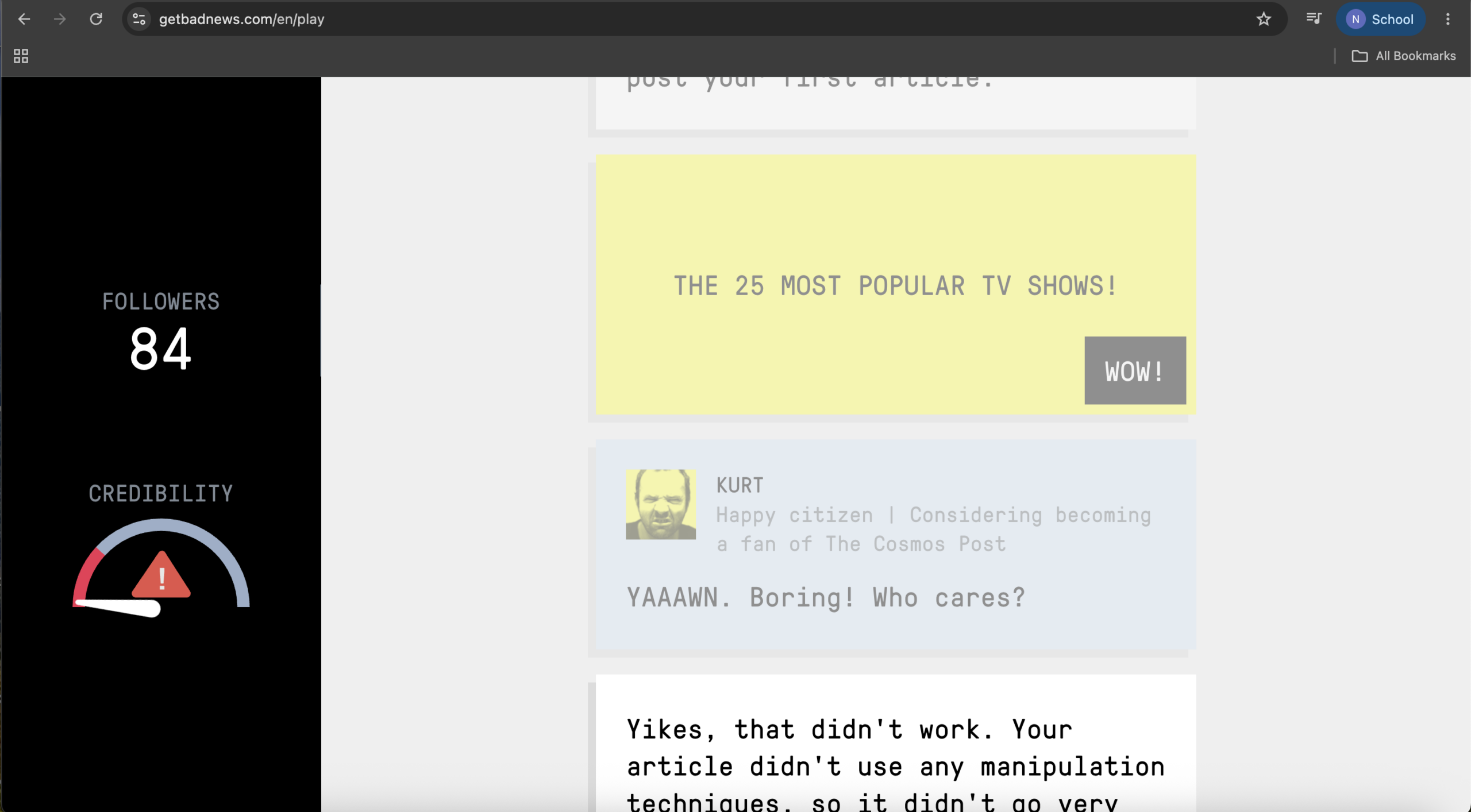
I also thought it was really interesting how the game explained that when you didn’t pick something that was manipulative enough, like when I chose to post “The 25 Most Popular TV Shows,” thinking that my page would need something less polarizing to build credibility and that would get me followers, but that wasn’t the case.
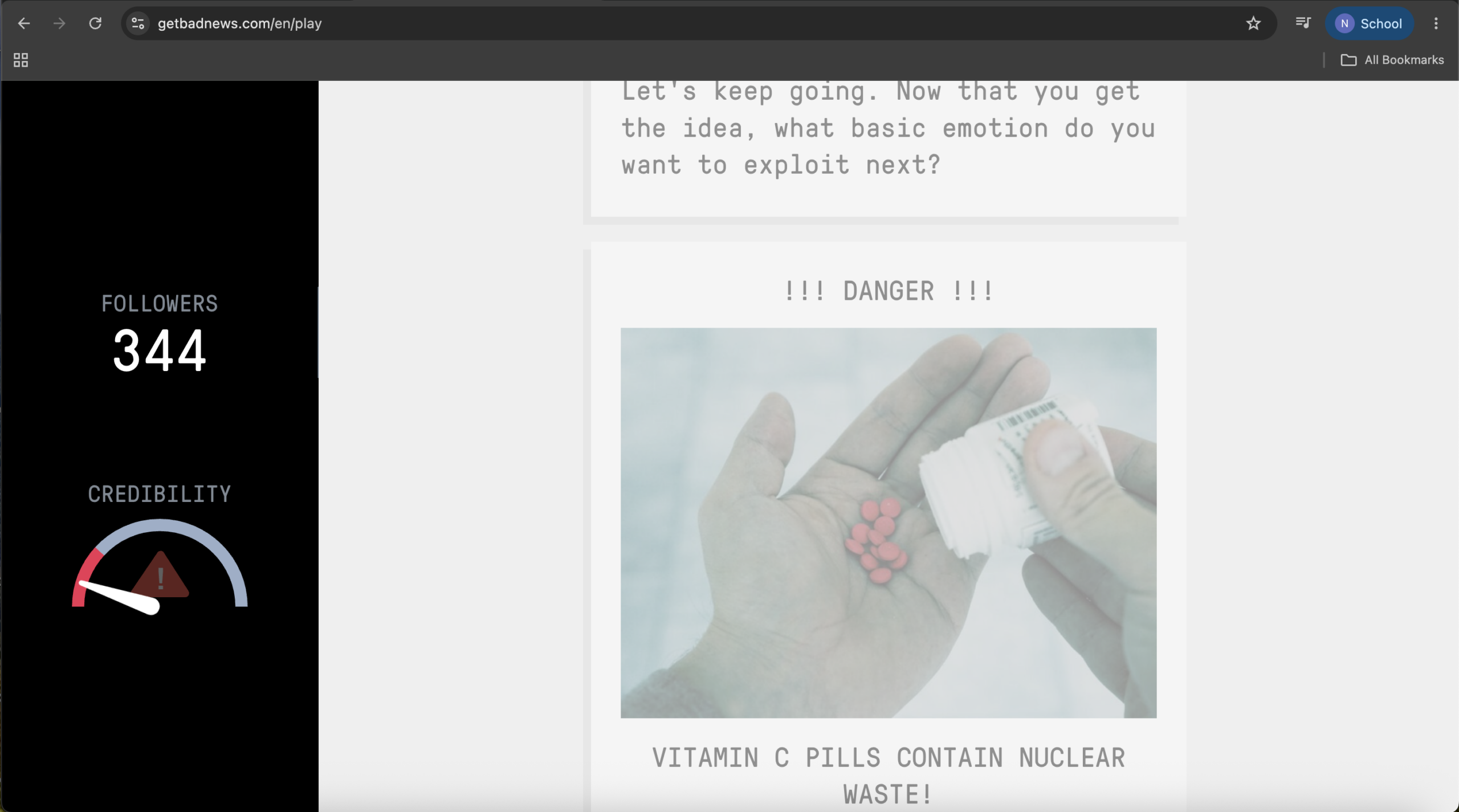
This game also made me really see how much misinformation is curated to get a reaction out of people and how it uses emotional manipulation to do so, and the power of exploiting fear.
I finished the game with 16,473 followers.
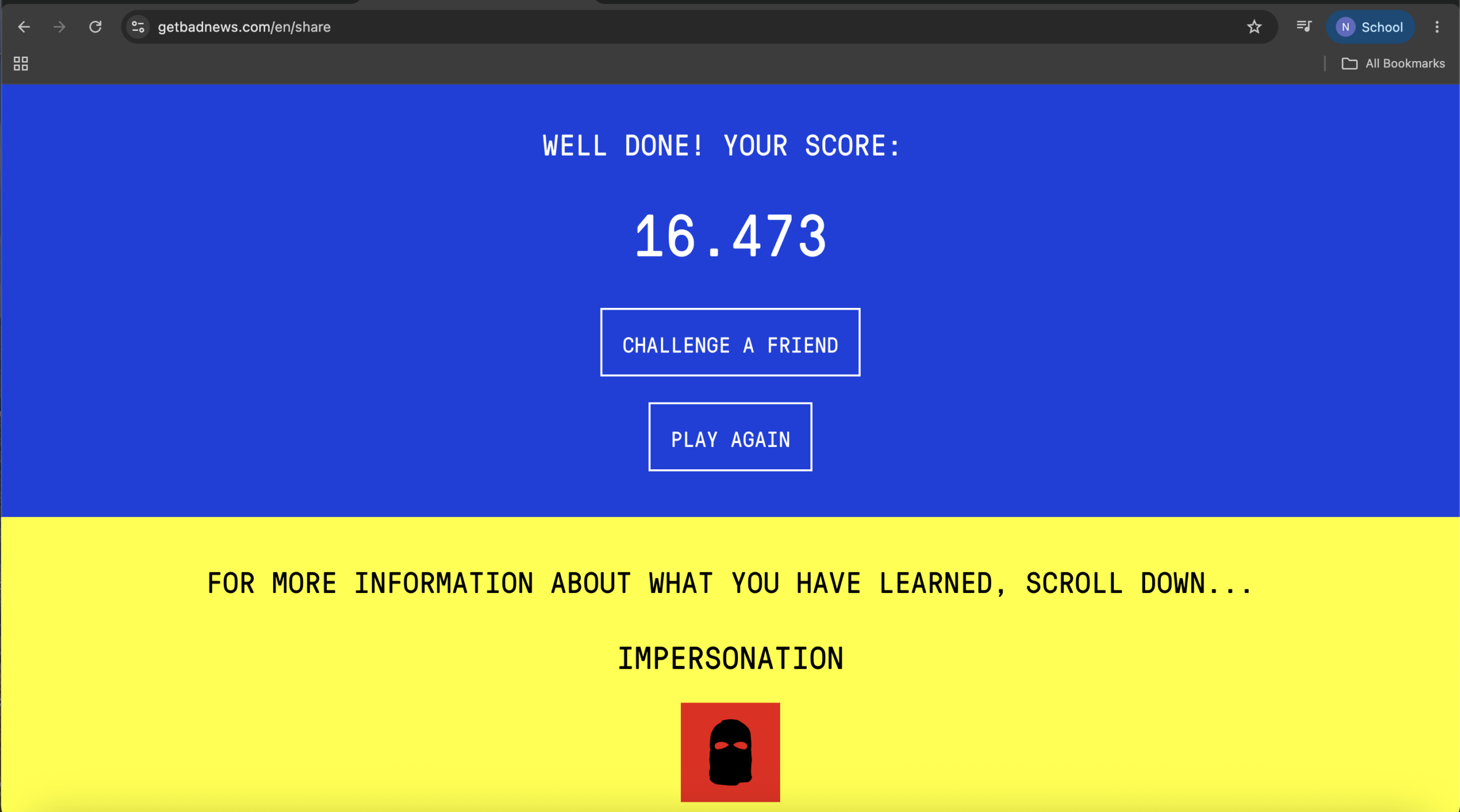
It is also crazy how bots are used to get more views, followers, and shares, and how that can make something seem more legitimate to viewers. You are also rewarded as your post becomes more popular by gaining more followers, and this cycle is similar to the way social media actually works. You really just need as much attention as possible, not necessarily accurate information, to be “successful.”
I think this game made it very clear to me why people may choose to spread misinformation. I had to choose the content, and I saw the “benefits” of doing so. In the same research study I mentioned perviously they found that those who played Bad News got better at identifying misinformation techniques after they played the game. My biggest takeaway is that the same tools I used in my day-to-day work to tell effective stories are also being used to make misinformation effective, and the only thing separating the two is the ethics behind them.
I don’t think that these tools alone can eradicate misinformation, but they do a really good job of putting media literacy skills into practice. These tools make it easier to see how you can develop habits when engaging with content to help stop the spread of misinformation and protect yourself.