
Blog post #3: Website or claim analysis: Evaluating the Patrick Ta “Transition Blush” Controversy
I came across a TikTok claim about the controversy between Patrick Ta and the makeup artist Painted by Esther. After Patrick Ta launched his ‘transition blush’ product, some people accused him of making a profit from a technique that had been popularised by Painted by Esther. I decided to look into this claim more carefully because social media often portrays controversies in black-and-white terms, while in reality there is usually a lot of context. I was especially doubtful about who invented the technique, whether Patrick Ta copied Esther, and what evidence people to make that accusation.
The first step in applying the SIFT method was for me to pause and spot the claim. I can’t assume that the first thing I hear about an issue on TikTok or social media is true. I then considered which parts of the story could be verified, which brought up three main questions: Whether Painted by Esther had created or made the transition blush technique popular; whether Patrick Ta had claimed the technique as his own; and why people had come to the belief that he was profiting from her work.
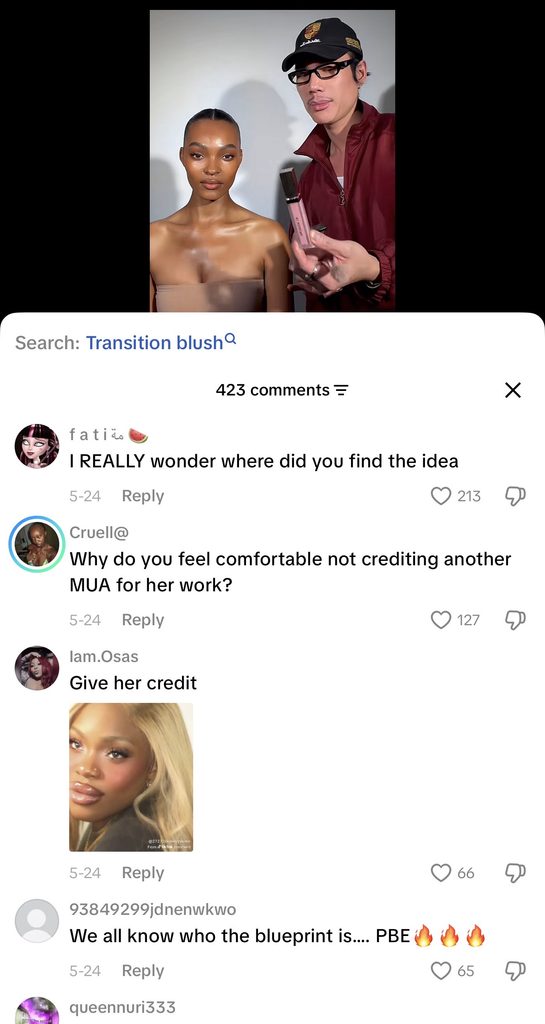
Next, I researched Esther’s work on social media platforms. She is famous for applying strong, gradient blush to darker skin tones. While Allure has credited her with helping popularized this style among a new generation, Esther has acknowledged that the technique originated with artists who came before her. This point matters to the debate. The evidence does not back up the idea that Esther entirely invented gradient blush. A more accurate statement is that she has played a role in reviving and developing the version of ‘transition blush’ that became widely recognized online. Even though many other artists have used this technique for a long time, it is simply Esther’s makeup for celebrities such as Docheii that has brought her name to the forefront in connection with the technique, since it is such a central feature of her makeup looks.
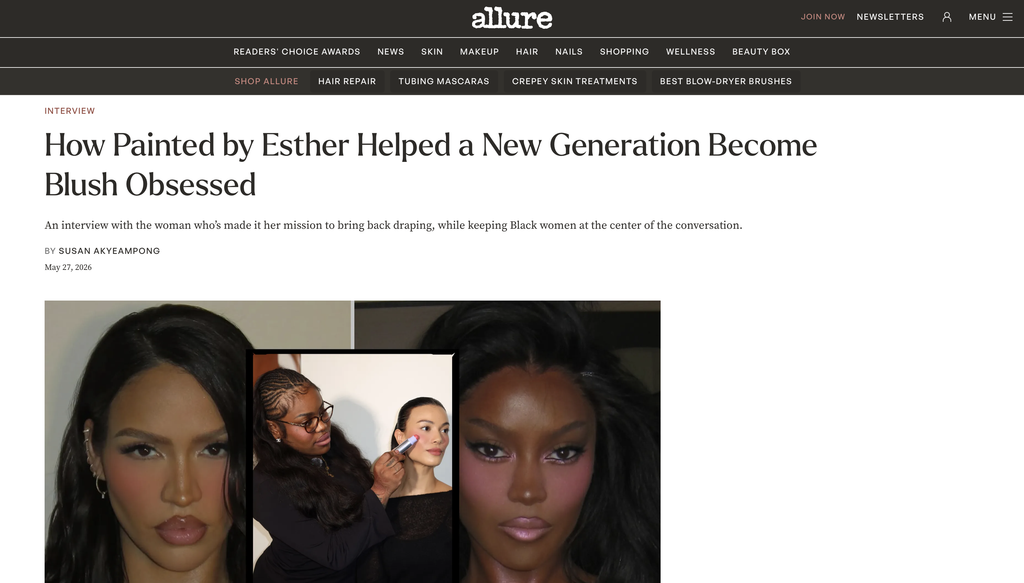
Then I went to the controversy’s original source: Patrick Ta’s video launching the blush. In Ta’s TikTok video launching the product, he said, “I created transition blush,” and described the effect as a flawless, seamless, blurred blush application.
It was this video that made it clear to me why people reacted as they did; even though Ta was talking specifically about the product or his particular version of the process, when he said “I created transition blush”, people interpreted that as him claiming credit for the general technique.
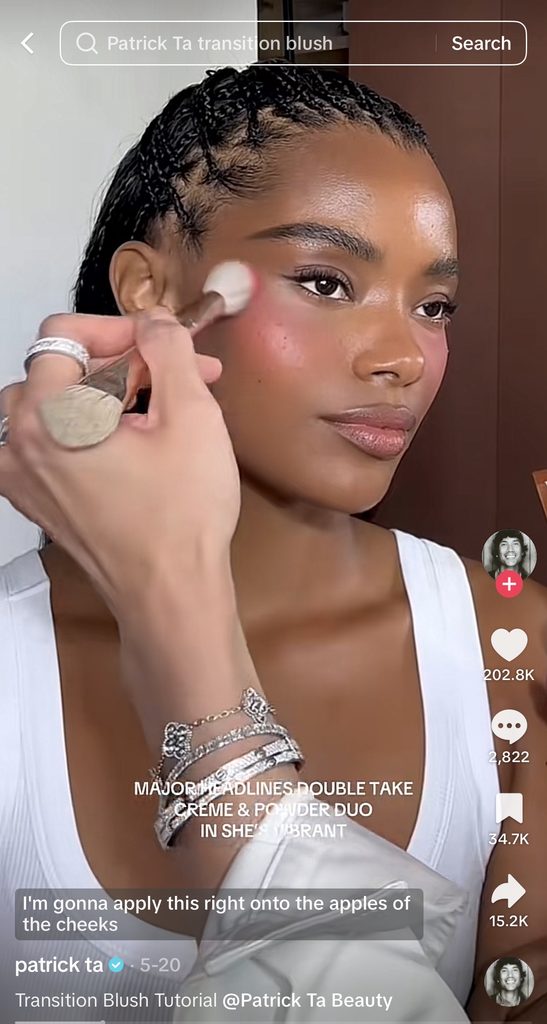
I also wanted to find out what Esther herself had said rather than just relying on what other people had said about her. She made it clear that she does not claim to have invented the general technique; instead she has given credit to artists who came before her, such as Kevyn Aucoin. Nevertheless, she did talk about her influence on the technique’s present popularity and mentioned her previous interactions with Patrick Ta’s team.
This further altered my initial view of the claim, since the issue was really about credit rather than who developed the makeup technique. This led me to consider another aspect of the issue: the role of race in the discussions. Painted by Esther is a Black woman whose work gained influence in the beauty industry, especially for the way she portrayed blush on darker skin tones. Because of this, I wanted to understand why people also saw Patrick Ta’s launch as an instance of appropriation.
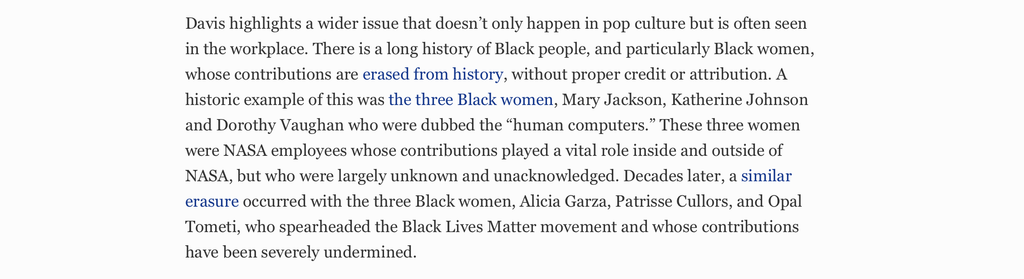
In a Forbes article on the controversy, Janice Gassam Asare links Esther’s situation to a wider historical pattern in which Black women’s ideas and labor are attributed to others. This background helped me to see why it was so controversial when Patrick Ta claimed that he had “created” transition blush. People were worried that a technique closely associated with a Black female artist could achieve commercial success while her role in making it popular was downplayed.
Finally, I looked at Patrick Ta’s response to the criticism and found that he admitted Esther had popularized the high-contrast blush look on darker skin. He apologized for the hurt and annoyance the launch caused, even though he insisted his aim was to make an existing artist technique easier for consumers to replicate, not to claim ownership of it.
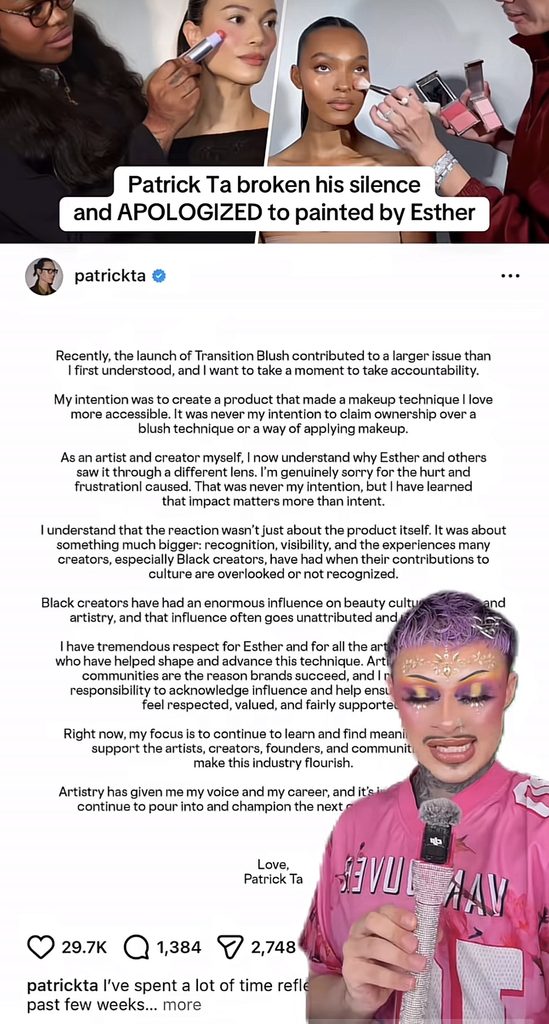
After applying the SIFT method and researching the claim fully, I don’t think the original claim is completely accurate at all. It is true that people accused Patrick Ta of profiting from a technique popularized by Esther, but that does not mean he stole a technique that belonged to her or that it was intentional, because he is also one of many makeup artists who often used this technique and has been using it for a long time.
This doesn’t mean that the criticism of Patrick Ta should be ignored either. The verbiage in the original product launch video and the popularity Esther built around this technique added a lot more context, and there are layers to this issue. The racial aspect also made me understand why this became a much larger conversation. The original claim oversimplified the situation, and this process of analyzing a claim showed me why it is important to investigate claims rather than decide something is true just because one part of the story checks out. By using lateral reading and comparing multiple sources, I can tell what is verifiable versus what is just someone’s interpretation of the issue and then better form an opinion of my own on the situation.